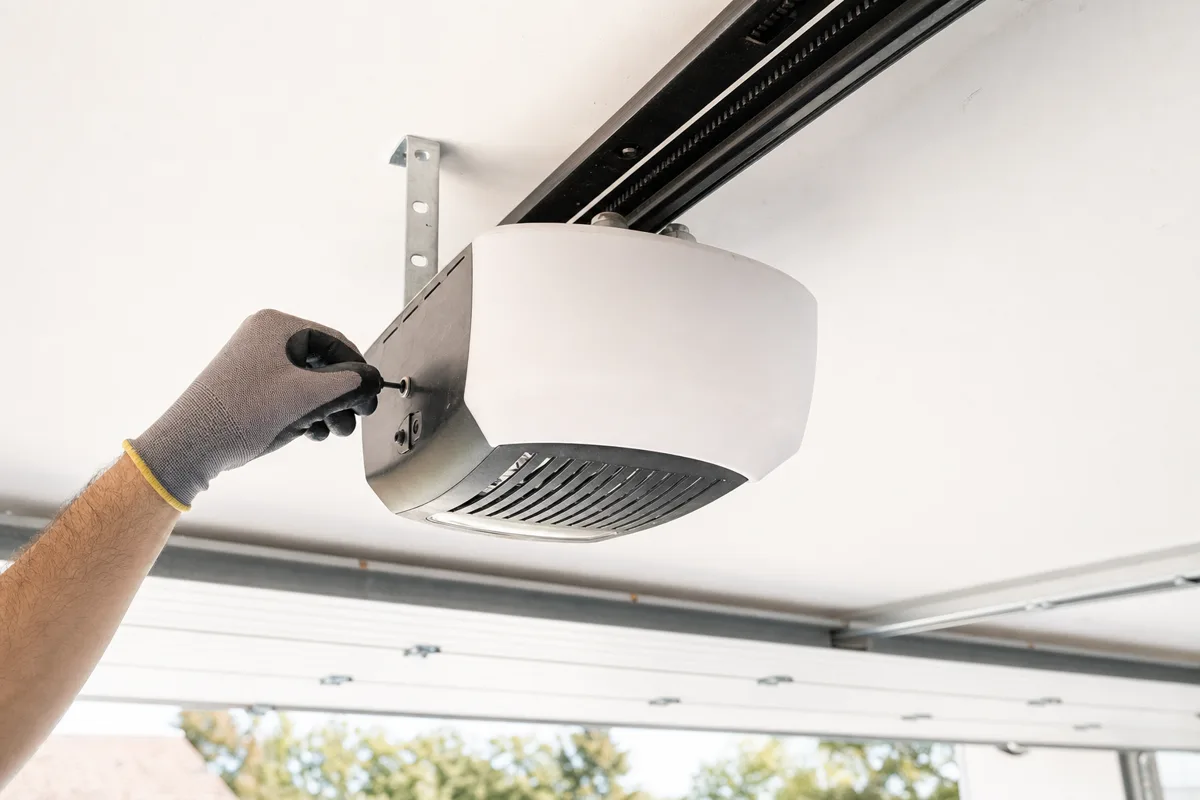

Garage Door Opener Repair
Diagnostics and repair for openers that are noisy, unresponsive, or reversing.
View serviceA door that reverses or refuses to close is often protecting something it detects. Start with the simple checks below, then stop using the opener if the door binds, hangs unevenly, or needs force.
A garage door that will not close is most often seeing a blocked, dirty, misaligned, or sun-glared photo-eye sensor. Clear the doorway and clean both sensor lenses first. If the sensors look normal but the door reverses, binds, or hangs crooked, stop running it because resistance in the tracks or door hardware may be the real cause.
Most closing faults come from the safety system, a physical obstruction, or a door that is no longer moving freely. The opener is designed to reverse when its photo eyes lose their clear path or when the door meets more resistance than expected. That is why repeatedly holding the wall control is not a fix. It can mask the symptom while a roller, track, cable, or spring problem gets worse. Begin with the door in view, keep children and pets clear of the opening, and use the remote only after each check. If it closes normally after correction, watch several cycles before treating the issue as solved.
Start at the top. The early checks are the most common causes and need no tools.
Move vehicles, bins, tools, packed snow, and loose items away from the door's path. Look along the floor where the bottom seal lands, not only in the middle of the opening. Then try one normal closing cycle while standing clear and watching for the exact point where it reverses or stops.
What it means: If it closes after clearing the threshold, an obstruction or raised seal was triggering the reversal system.
Find the small sensors near the bottom of each side track. Wipe each lens with a soft dry cloth and check that neither bracket is bent. Their indicator lights should show the manufacturer’s normal aligned state. A loose extension cord, spiderweb, leaf, or bike wheel can interrupt the invisible beam.
What it means: A light that flickers or changes when you move the sensor points to misalignment or a blocked beam.
If the problem appears on bright afternoons, hold a piece of cardboard beside, not over, the receiver sensor to shade its lens. Do not place anything in the doorway. Try closing the door once with the lens shaded and observe the indicator light before and after the test.
What it means: If the LED steadies when shaded, low sun glare is interfering with the photo-eye receiver.
Use the wired wall control rather than a remote for one test. Look for a lock or vacation setting, which commonly leaves the wall button working while remotes do not. If you must hold the wall button continuously for the door to descend, treat that as a sensor bypass signal, not a repair.
What it means: A hold-to-close condition usually confirms a photo-eye circuit problem rather than a remote problem.
With the opener disconnected only when the door is fully closed, look along both tracks for a bent section, a roller riding outside the track, or a cable that looks slack. Do not pull a red release handle while the door is open. Also listen for a scrape or bang just before reversal.
What it means: Binding, crooked travel, or a loose cable means the door needs mechanical assessment before more powered cycles.
Photo-eye checks are low risk, but do not turn adjustment screws, loosen track fasteners, or force a reversing door closed. An uneven door, slack cable, or sudden heaviness can indicate a track, cable, or spring fault. Those parts carry the door's weight and stored tension. Keep the door closed if possible, keep people clear, and submit the booking form instead of resetting the system.
Mississauga's winter sun can sit low enough to shine directly into a photo-eye receiver, especially when a driveway faces the afternoon light. The symptom can feel random: the door closes after dusk or on cloudy days, then reverses in clear daylight. Snow piled beside the tracks and wet salt residue on a lens can add another interruption. Test for glare before changing any hardware, then keep the lenses clean through winter. A small repositioning or shield may be appropriate, but the sensor must still have an unobstructed view across the opening.
Fill out the form and we'll confirm your appointment by email.
These guides are written for Mississauga homes. If the fix is beyond a homeowner check, we work everywhere inside this area.
Map data © Google. Pin shows the service area, not a walk-in location — all work is done at your home.

A real callout, not stock imagery.
A sectional door pulled off its tracks, taken down and supported on site so it could be checked and re-hung safely — photographed on the job.
