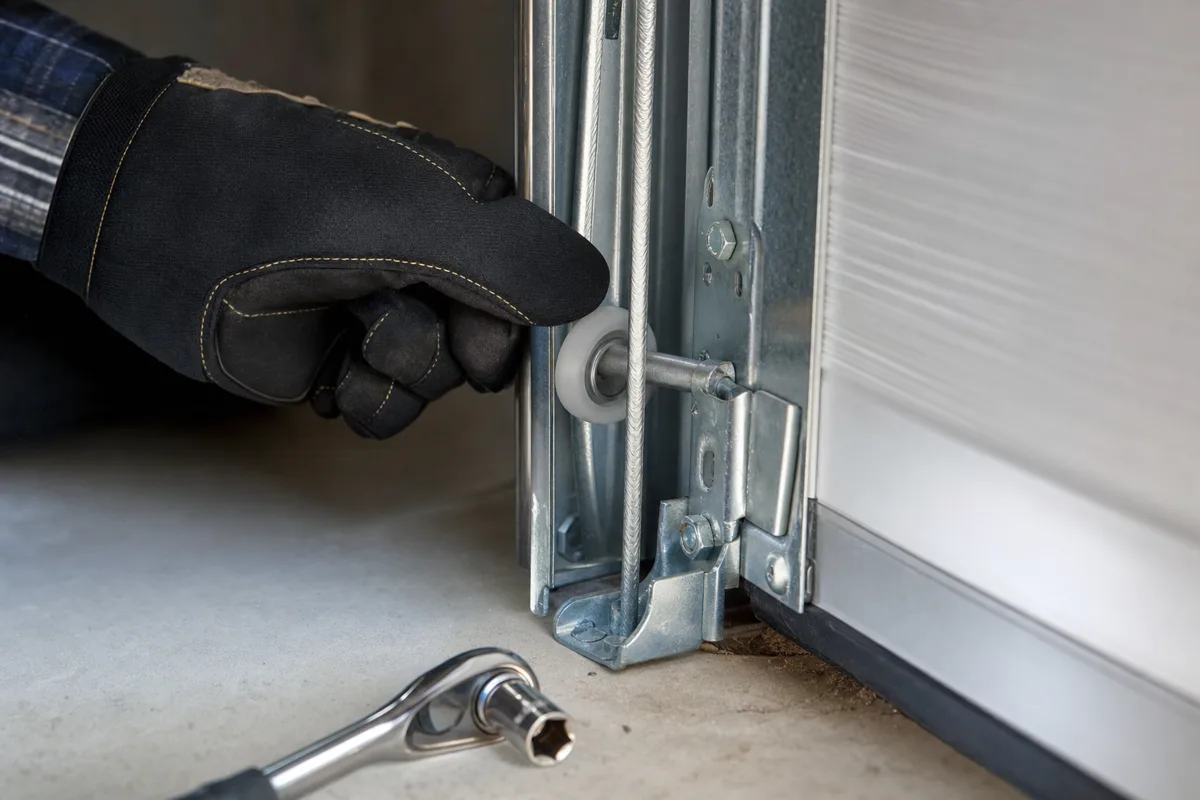

Garage Door Roller & Track Repair
Off-track correction, worn roller replacement, and bent track realignment.
View serviceAn off-track garage door can shift its weight onto a few rollers, cables, and brackets. Stop the opener, keep clear of the opening, and use these observations to describe the problem without trying to force it back.
If your garage door is off track, stop using the opener immediately and do not try to push the roller back into place. A roller outside the track, a crooked door, or a slack cable can let the door shift suddenly. Leave the door where it is if it is stable, keep people clear, and book professional track and cable repair online.
A garage door comes off track when a roller leaves its guide, a track bends or shifts, or the door moves out of balance. It may look like one side is sagging, a roller is visibly outside the track, or the door has stopped partway at an angle. This is not a problem to correct by pushing the panel, loosening a bracket, or running the opener again. The system is designed to carry a heavy moving door in a precise path. Once that path is compromised, a cable can slacken and the remaining rollers can be overloaded. Your job is to stop movement, make the area safe, and collect useful observations for repair.
Start at the top. The early checks are the most common causes and need no tools.
Release the wall button and do not send another remote command. If the door is partly open, do not pull the emergency release or stand beneath it. Keep vehicles, children, and pets out of the garage opening. Look from a distance to see whether the door is resting evenly or hanging at an angle.
What it means: A door that is tilted or partly open should be treated as unstable and left untouched.
From a safe distance, inspect both vertical tracks and the curved sections above them. You may see a roller wheel outside the track, a roller stem bent at a hinge, or a gap where the track has spread. Do not put hands between the door sections or inside a track.
What it means: A visibly escaped roller confirms an off-track condition and rules out further normal opener use.
Check each lower side without touching the hardware. A cable may be loose, wrapped unevenly, or hanging where it normally runs tight. Also look for one bottom corner sitting higher than the other. Never attempt to wind a cable onto a drum or loosen the bottom bracket.
What it means: A slack or displaced cable means the door's lifting system has lost alignment and needs professional correction.
Look for fresh panel dents, a bent track, or stored objects pressed against the door's travel path. A minor impact can push a track out of position or damage a roller without leaving a dramatic mark. Take a clear photo from several feet away if it can be done safely.
What it means: Impact marks near the track or panel help explain why the roller left its intended path.
Record whether the door is fully closed, partly open, or stuck near the curved track. Also note which side is lower and whether the opener made a bang, scrape, or strain first. Do not attempt a manual close or open test; the position and sound are enough diagnostic information.
What it means: These details help distinguish a roller-track issue from a cable, spring, or opener-related failure.
An off-track door can fall or shift because its guided path and lift balance are compromised. Do not pull the emergency release, remove track bolts, force a roller back, or straighten the track with pliers. Bottom brackets and cables can remain under load. Keep clear, do not park beneath an open door, and submit the booking form promptly for track and cable repair.
Humid summers and damp lakeshore air around Lakeview, Port Credit, and Clarkson can contribute to corrosion on exposed low hardware over time. Moisture alone does not put a door off track, but corrosion can reduce the smooth movement of rollers and hinges, especially when combined with grit or a minor impact. In coastal-feeling garage conditions, inspect visibly rusty rollers and track areas during routine cleaning rather than waiting for a scrape. A door that begins rubbing the track is easier to address before a roller escapes it.
Fill out the form and we'll confirm your appointment by email.
These guides are written for Mississauga homes. If the fix is beyond a homeowner check, we work everywhere inside this area.
Map data © Google. Pin shows the service area, not a walk-in location — all work is done at your home.

A real callout, not stock imagery.
A sectional door pulled off its tracks, taken down and supported on site so it could be checked and re-hung safely — photographed on the job.
