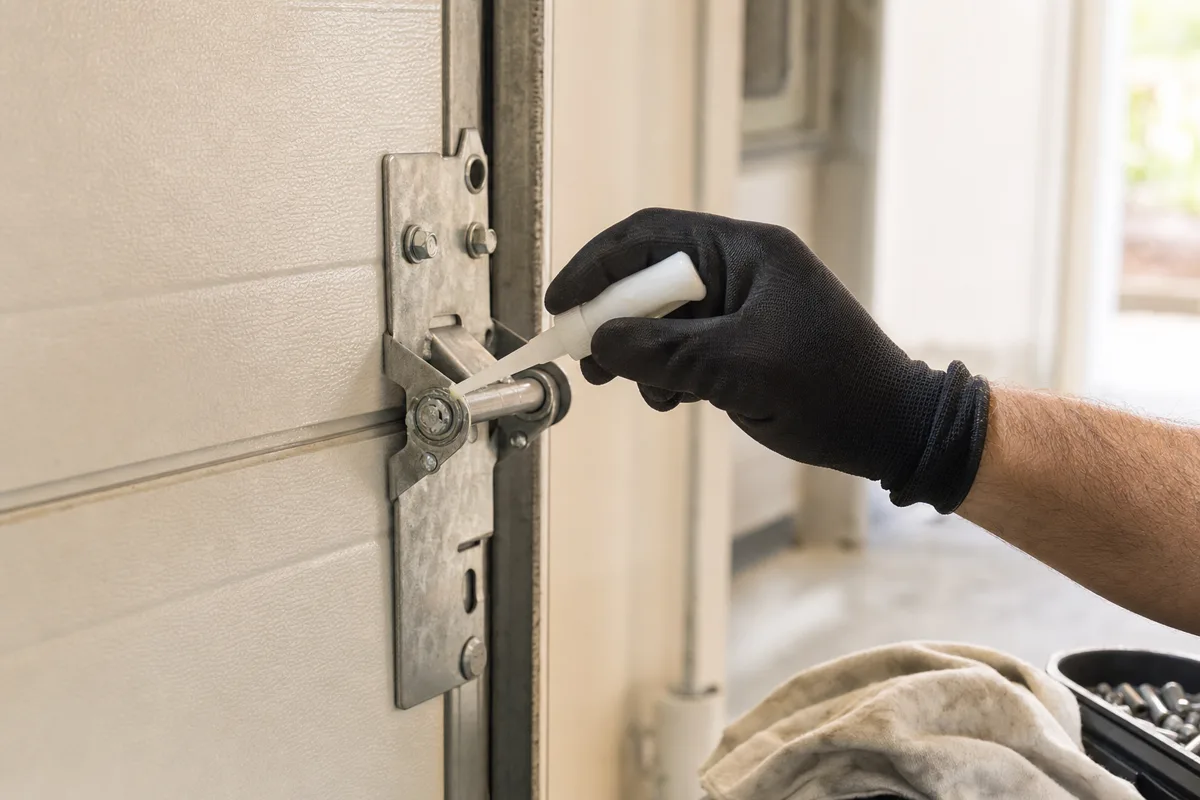

Garage Door Maintenance & Tune-Up
Preventive lubrication, hardware inspection, and balance adjustment.
View serviceGarage doors are never silent, but a new sharp, grinding, or banging noise deserves attention. The sound's timing and location can narrow the fault before continued use damages a track, roller, opener, or spring.
A loud garage door is commonly caused by dry rollers or hinges, loose hardware, or a roller rubbing the track. The noise alone does not identify a safe repair, so locate when it happens and watch the door's movement. Stop using the door if it bangs, grinds, jerks, or moves unevenly, because those signs can involve load-bearing hardware.
Start by describing the noise rather than guessing at a part. A squeal usually points to dry moving hardware, while a metallic scrape suggests roller or track contact. A single bang can be a loose hinge, a cable shift, or a spring breaking. Listen from inside the garage with the door fully visible, and run only one slow cycle at a time. Avoid standing beneath a moving door or putting hands near rollers. A normal door should move steadily without jolting, shaking the track, or making the opener strain. If the noise arrives with uneven travel, pause the opener and investigate from a safe distance.
Start at the top. The early checks are the most common causes and need no tools.
Run the door once while someone listens from a safe distance. Note whether the sound happens at the start, through the curved track, near the floor, or only as the opener begins. Also note whether it occurs on manual movement after the opener is disconnected with the door closed.
What it means: A sound tied to one location usually narrows the issue to nearby rollers, hinges, track, or door sections.
Check for items touching the door, rails, or opener rail: a ladder, storage hooks, extension cord, or loose chain can imitate a mechanical rattle. Make sure nothing is resting against the tracks. Then inspect the door's inside face for a loose handle, lock bar, or panel reinforcement.
What it means: If the noise stops after clearing contact points, the door hardware may be sound and the nearby item was rattling.
With the door closed, use a flashlight to look for cracked roller wheels, missing roller stems, worn hinge leaves, or dark metal dust below a roller. Do not place fingers in the track. A roller should travel inside the track without climbing its edge or wobbling severely.
What it means: A chipped wheel, wobble, or metal dust indicates a worn roller or hinge that should be replaced.
Look for bolts at hinges, brackets, and horizontal track supports that appear visibly backed out. Do not tighten any fasteners at the bottom brackets, cable drums, springs, or track mounting points yourself. Those locations may be under load or affect the door's alignment if moved.
What it means: A visibly loose hinge fastener can cause rattling, while loaded hardware should be left untouched for service.
Watch the opener rail and motor housing during one cycle. A chain or belt can make normal operating noise, but repeated clicking, grinding from the motor, or a rail that bucks as the door moves is not normal. Stop if the opener hums without moving the door.
What it means: Motor strain or a shaking rail suggests the opener is fighting resistance or has an internal drive issue.
A mild squeak from a dry hinge is not an emergency, but a sudden bang, heavy grinding, or repeated jolt is a reason to stop using the door. Never spray lubricant on a broken-looking cable, spring, or track and assume that solves it. Do not tighten bottom brackets or spring hardware. If the door shakes, tilts, or the opener strains, leave it closed and submit a booking form so the moving system can be inspected safely.
In southern Ontario, road salt and de-icing brine can be tracked into a garage on tires and settle on low steel hardware. Over time, that residue encourages corrosion at rollers, hinges, and the bottom track area. Rinse melted slush from the threshold when practical and wipe exposed hardware dry rather than coating every part with oil. In Mississauga, a new winter scrape that begins near the floor is worth checking for salt residue, packed grit, and a roller that no longer turns smoothly.
Fill out the form and we'll confirm your appointment by email.
These guides are written for Mississauga homes. If the fix is beyond a homeowner check, we work everywhere inside this area.
Map data © Google. Pin shows the service area, not a walk-in location — all work is done at your home.

A real callout, not stock imagery.
A sectional door pulled off its tracks, taken down and supported on site so it could be checked and re-hung safely — photographed on the job.
